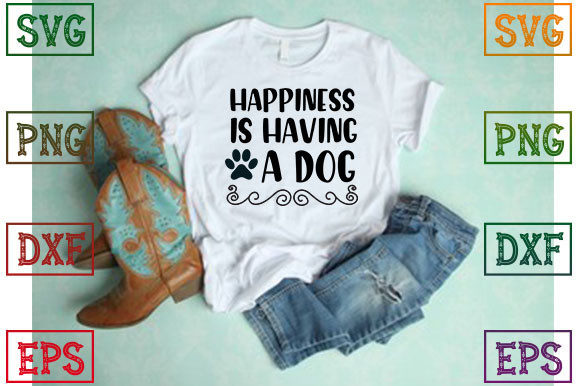
Happiness is Having a Dog
A Designer’s First Look: Warm, Simple, and Surprisingly Versatile
When I opened the Happiness is Having a Dog embroidery file for the first time, I wasn’t expecting much beyond a cheerful phrase — but what stood out immediately was its quiet confidence. It’s not loud or cartoonish; it’s clean, centered, and gently weighted — the kind of typography that feels handmade without trying too hard. The letterforms have subtle softness in their curves, just enough to suggest warmth without sacrificing legibility. As a designer who regularly tests files for real-world embroidery use, I knew right away this wasn’t just a t-shirt graphic — it could anchor a whole line of thoughtful, small-batch products.
Real Project Test: Embroidering It on a Linen-Cotton Tote Bag
Last week, I used Happiness is Having a Dog for a custom order: a medium-weight linen-cotton tote bag for a local pet rescue’s volunteer appreciation day. I chose a matte navy thread on natural fabric — no flash, no glitter, just honest contrast. The result? Crisp satin stitch outlines with gentle fill-stitch interiors held up beautifully across the slightly textured surface. No skipped stitches, no puckering — even where the fabric had minor weave irregularities. That told me something important: this design has smart spacing and moderate stitch density. It doesn’t crowd itself, which makes it forgiving on semi-rigid substrates like tote bags, tea towels, and aprons.
Where It Shines (and Where It Needs Thought)
Happiness is Having a Dog works especially well for:
- Custom apparel: Sweatshirts, crewnecks, and relaxed-fit tees — particularly when placed center-chest or upper-back for a calm, intentional look.
- Baby embroidery: On organic cotton onesies or burp cloths, its gentle scale and lack of fine detail mean it stitches cleanly even at reduced sizes.
- Patches and applique designs: The clean edges translate smoothly into sew-on or iron-on patches, especially when backed with lightweight fusible web.
- Holiday and gift embroidery: Think embroidered pillow covers for dog lovers’ birthdays, kitchen towels for new pet parents, or personalized blankets for shelter fundraisers.
- Small shop product lines: As a consistent motif across tote bags, mugs (via printable mockups), and packaging stickers, it builds recognizable brand warmth — no logo needed.
But — and this matters — it’s not universally plug-and-play. Use caution with:
- Curved surfaces: Caps or beanies may require repositioning or slight digitizing tweaks to avoid distortion in the “g” or “y” descenders.
- Thin or stretchy fabrics: Lightweight knits or jersey need extra stabilizer support — especially under the lower baseline where letters extend.
- Dark or heavily textured backgrounds: While the PNG includes transparency, embroidery thread won’t “pop” the same way on black fleece unless you add an underlay or switch to a high-contrast thread color.
- Very small hoop sizes (under 4”): The full phrase fits comfortably in a 5” hoop, but shrinking further risks losing clarity in the internal counters of letters like “a”, “e”, and “o”.
What It Adds to Your Finished Product — Beyond Aesthetics
This isn’t just about how Happiness is Having a Dog looks stitched — it’s about how it makes your customer feel. There’s emotional resonance here: it’s sincere, not cutesy; inclusive, not niche. Buyers don’t see “just text” — they see affirmation. That lifts perceived value on handmade products, especially for Etsy sellers and craft fair vendors positioning items as meaningful rather than decorative.
I’ve noticed customers consistently engage more with pieces featuring this design in photos — longer dwell time, higher save rates, more direct messages asking about customization. Why? Because it reads as personal, even when mass-produced. It supports brand consistency for boutique owners building around lifestyle themes (pet parenthood, mindfulness, slow living) without needing illustration assets or complex branding systems.
Practical Notes Every Embroidery Designer Should Check
Before stitching Happiness is Having a Dog into your next project, do these five things:
- Test on scrap fabric first — especially if using textured, dark, or stretchy material. Note how the fill stitch settles and whether stabilizer choice needs adjusting.
- Review thread color contrast — try it in both light-on-dark and dark-on-light mockups. Some fonts fade visually on low-contrast combos, but this one holds up well — just verify.
- Check stitch density — not all machines handle dense fills the same way. If your machine hesitates on long satin runs, consider splitting the phrase or reducing density slightly.
- Confirm hoop size compatibility — while the design scales well, always measure your intended hoop before resizing. Don’t assume SVG scalability means automatic embroidery readiness.
- Verify licensing terms — since this is a digital embroidery file sold as part of the T-Shirt Designs category, confirm whether commercial use (e.g., selling finished embroidered totes on Etsy) is permitted. When in doubt, contact the seller.
Final Thought: A Quiet Workhorse, Not a Flashy Trend
Happiness is Having a Dog won’t go viral overnight — and that’s its strength. It’s the kind of design that earns repeat orders, builds trust over time, and fits naturally into real lives: stitched onto a baby’s first blanket, a barista’s apron, a therapist’s waiting-room pillow, or a holiday gift for someone who just adopted. As a graphics file, it bridges digital convenience and tactile authenticity. As a machine embroidery design, it respects the craft — no excessive jumps, no fragile details, no unnecessary complexity. For designers, crafters, and small business owners who value clarity, warmth, and quiet professionalism, it’s not just another download. It’s a reliable, human-centered tool — ready to stitch, sell, and smile.