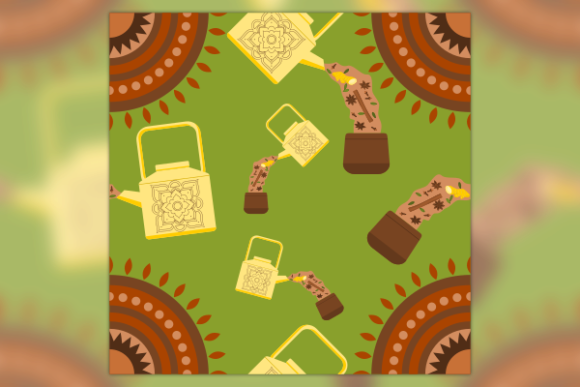
Pouring Masala Chai Ingredients Pattern
First Impressions: Warm, Whimsical, and Deeply Cultural
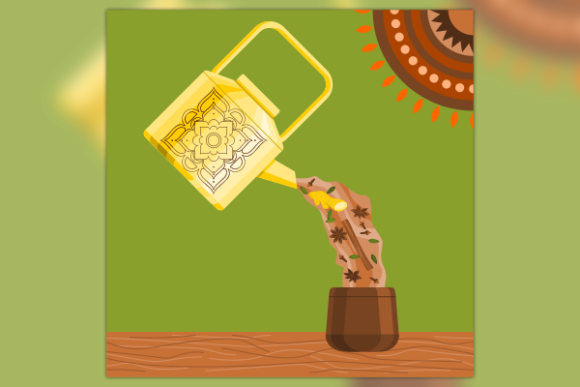
When I opened the Pouring Masala Chai Ingredients Pattern, what struck me first wasn’t just the subject—it was the quiet confidence in its composition. The side-view pour from a patterned metal kettle into a rustic pottery cup feels grounded, intentional, and full of movement. The Indian circle motif woven into the background isn’t decorative filler; it’s structural rhythm—subtle enough to recede, strong enough to anchor. As an embroidery designer who’s stitched hundreds of food- and culture-themed motifs, I immediately sensed this wasn’t a generic “tea clipart” file. It carries weight, warmth, and narrative—ideal for makers who want their handmade product to tell a story before the first stitch is even placed.
A Real Project Test: Embroidering This on a Linen Tea Towel
Last week, I prepped a batch of organic linen tea towels for a local boutique’s Diwali collection—and chose the Pouring Masala Chai Ingredients Pattern as the centerpiece. Why? Because customers don’t just buy kitchen linens; they buy mood, memory, and meaning. This design delivered all three. When digitized at 3.8" wide (a comfortable size for towel corners or center panels), the kettle’s curved spout translated beautifully into satin stitch flow, and the spices scattered mid-pour—cinnamon sticks, cardamom pods, ginger slivers—held clarity without overcrowding. The circle motif became a soft, breathable fill stitch background—not dense, not distracting, just *there*, like heritage etched into cloth.
Where It Shines (and Where It Asks for Thought)
The Pouring Masala Chai Ingredients Pattern excels in medium-to-large applications: tote bag design, sweatshirt embroidery, pillow covers, and apron front panels. Its side-view layout gives natural horizontal flow—perfect for garments with seams or curved surfaces like caps (though cap placement needs careful hooping near the bill curve). On baby items—think organic cotton burp cloths or muslin swaddles—the motif reads gently, not busily. And yes, it works for personalized gift embroidery: add a monogram in clean running stitch above the cup, and you’ve got heirloom-level charm.
But here’s where realism matters: this isn’t a “throw-it-on-any-fabric” embroidery file. On thin or stretchy knits (like lightweight t-shirts), the fine lines of the kettle’s patterning risk distortion without proper cutaway stabilizer. On dark fabric, test thread colors early—gold or burnt sienna cottons lift the spices; charcoal gray makes the cup pop without competing. And avoid cramming it into hoops under 4x4"—the spice scatter loses legibility, and the circle motif starts to feel cramped rather than cohesive.
What It Adds to Your Craft Business—Beyond Aesthetics
As an Etsy seller and small shop owner myself, I pay attention to how a design affects perceived value—and customer trust. The Pouring Masala Chai Ingredients Pattern elevates a simple custom apparel item into something culturally resonant and thoughtfully curated. Buyers recognize authenticity. They pause. They ask, “Is this hand-drawn?” (It feels like it.) That pause builds connection—and connection drives repeat sales. For commercial embroidery clients—cafés, wellness studios, South Asian boutiques—this motif reinforces brand warmth without cliché. It’s also a smart digital embroidery file to bundle: pair it with simple chai cup silhouettes or spice-label text files, and you’ve got a versatile design assets pack for your shop.
Practical Notes Every Embroidery Designer Should Check
- Always test on scrap fabric first—especially if using textured weaves (like burlap or heavy linen) where stitch definition can blur.
- Review stitch density before finalizing. The kettle’s metallic texture uses tighter fills; ensure your machine handles that without puckering.
- Confirm hoop size compatibility. While scalable as an Editable SVG vector illustration, tight curves shrink poorly below 3".
- Inspect small details: cardamom pods and ginger edges should remain distinct—not merged—after stitching. Zoom in on your digitized preview.
- Test black-and-white mockups. Does the contrast hold? If not, adjust underlay or reduce fill opacity in your software.
- Compare light vs. dark fabric backgrounds. Some spice elements gain depth on cream; others sing on indigo.
- Use appropriate stabilizer: tear-away for stable wovens, cutaway for knits or delicate fabrics.
- Verify licensing before selling finished items or bundling as digital embroidery files. Since it’s labeled for creating Patterns and Graphics, confirm commercial use rights with the source.
Final Thought: Not Just a Design—A Conversation Starter
I’ve used the Pouring Masala Chai Ingredients Pattern on everything from embroidered patches for a chai pop-up stall to holiday personalized gift sets for new parents (paired with “Sip Slowly” script). Each time, it performed—not perfectly out of the box, but reliably, gracefully, and with unmistakable character. It doesn’t shout. It simmers. And in a market flooded with fast, forgettable motifs, that kind of quiet resonance is rare. If your craft business values intention over impulse, storytelling over trend-chasing, and craftsmanship over clutter—you’ll find this pattern isn’t just stitched onto fabric. It’s woven into the work you’re proud to put your name on.